A Ritual Our Grandmothers Never Skipped
Before wellness was a trend, our grandmothers already knew the secret.
They didn’t call it self-care — they simply knew that oil and touch were medicine.
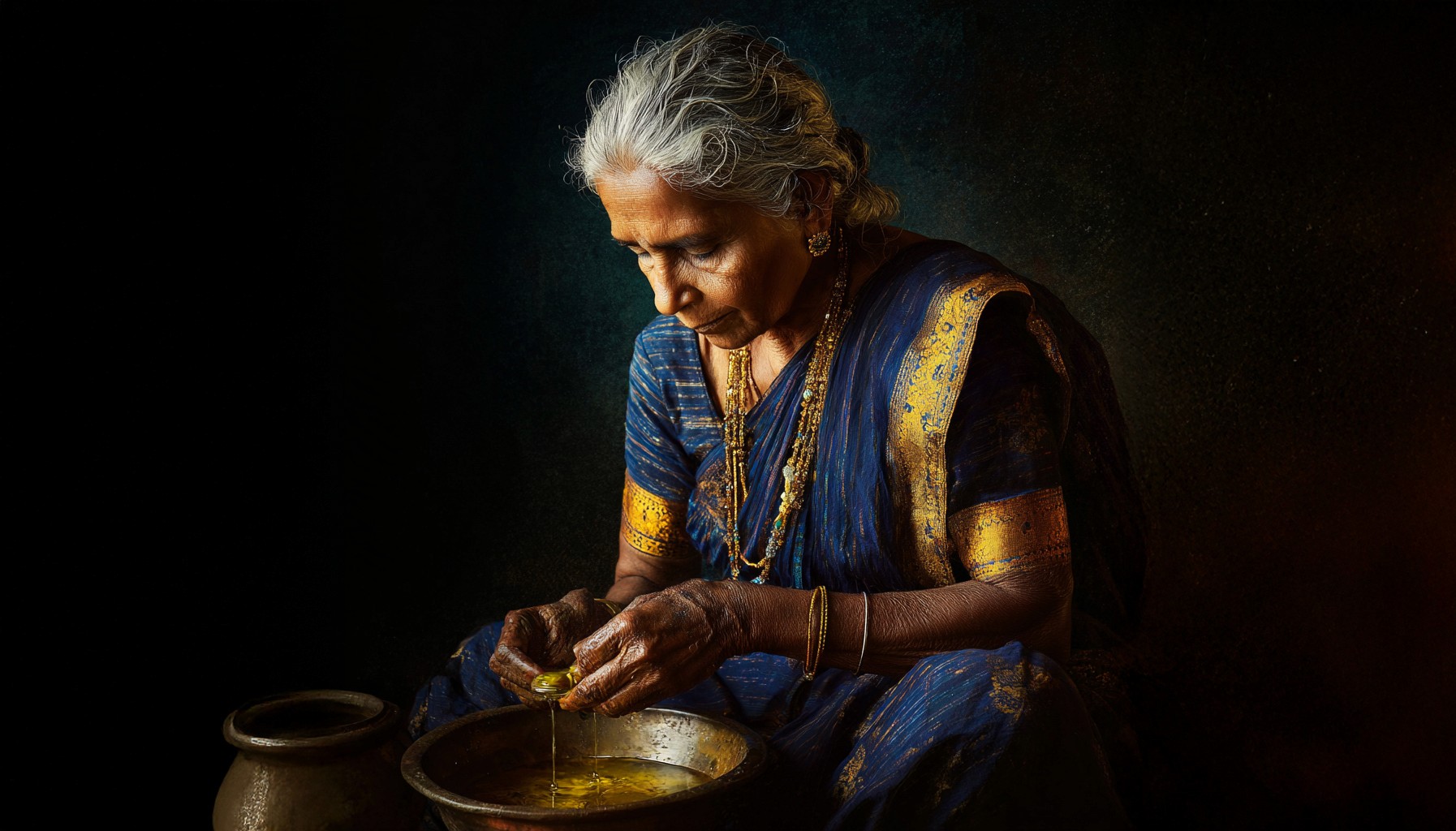
Each evening, they’d warm oil in a small brass pot, rub it into tired limbs, and let the body breathe again.
They didn’t need a spa appointment or a playlist.
Just warm oil, quiet time, and intention.
In Ayurveda, this ritual is known as Abhyanga — a daily practice of self-massage. But for our ancestors, it was something far simpler: a way to return to themselves.
Oil as Love
In Sanskrit, the word for oil — sneha — also means love.
Both offer warmth, nourishment, and connection.
When we anoint the body with oil, we aren’t just softening skin — we are softening the edges of our day. The parts that have grown tight from doing, striving, or holding too much.
Warm oil calms the nervous system, supports circulation, nourishes tissues, and helps the body release fatigue. But beyond the science lies something more tender: the reminder that care begins with touch.
To oil the body is to say: You belong here.
Choosing Your Oil
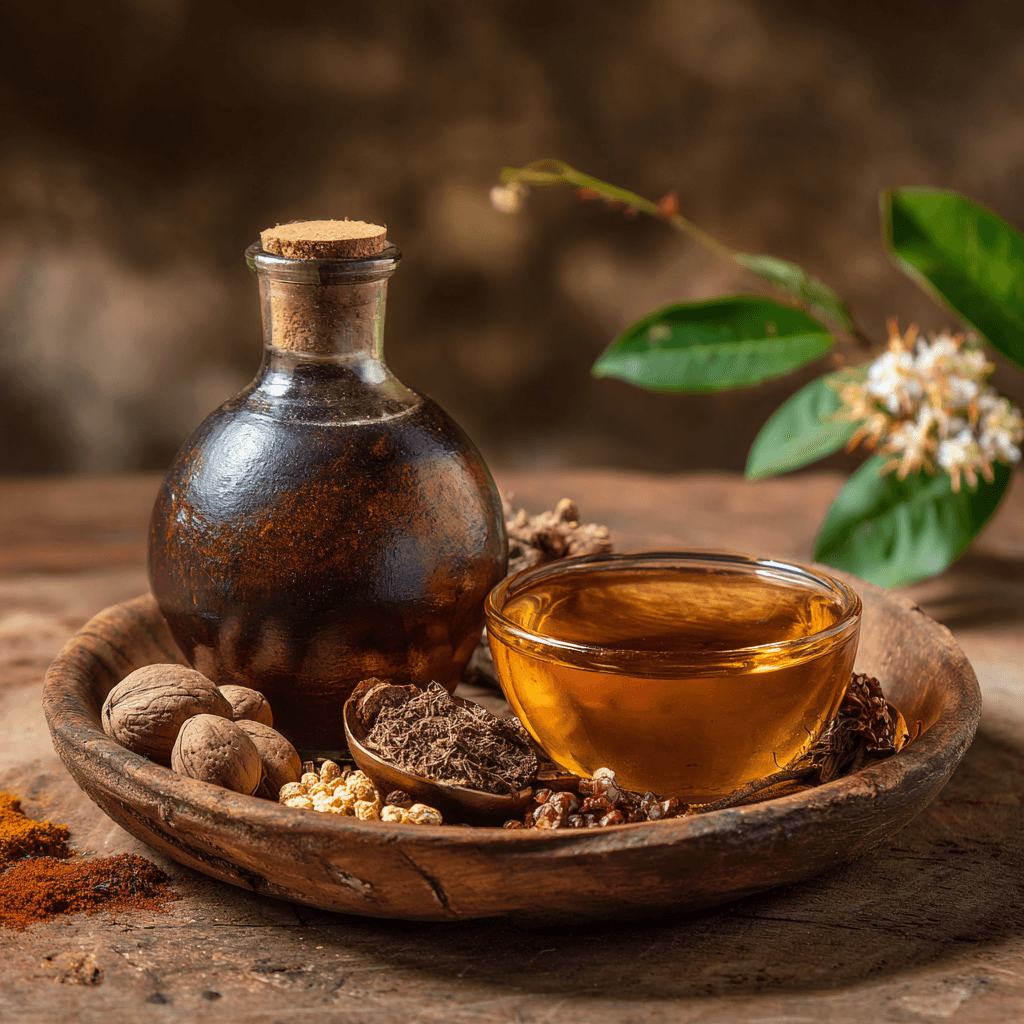
Our grandmothers used what was nearby — sesame in winter, coconut in summer, almond when the skin felt dry. Each had its rhythm, its reason, its season.
Here’s a simple guide for you:
Feeling cold or anxious?
Choose sesame oil — warming, grounding, and deeply nourishing.
Feeling overheated or irritable?
Use coconut oil — cooling and soothing.
Feeling heavy or sluggish?
Try almond or mustard oil — lighter and invigorating.
The power isn’t in the label — it’s in the intention.
When you pour that oil into your palm, imagine you’re pouring love.
How to Begin
Self-massage is best done warm — a warm room, warm oil, warm heart.
Warm your oil. Place the bottle in a bowl of hot water until it’s pleasantly warm.
Begin at the crown. Massage a few drops into your scalp — it calms the mind and encourages deep rest.
Move downward. Use long strokes on the arms and legs, gentle circles on joints and abdomen. Move slowly. Let your hands communicate with your body.
Pause and rest. Allow the oil to soak in for 15–20 minutes before rinsing with warm water. No rush, no scrubbing away the softness.
For a deeper ritual:
After your Abhyanga, draw a warm bath and drop in one of our Ayurvedic Bath Bombs.
Infused with rose, lavender, and night-blooming jasmine, they soothe the senses and complete the ritual — transforming your bath into a sanctuary for body and spirit.
Why It Matters
In a world that glorifies speed, Abhyanga reminds us to move slowly.
It teaches us that rest isn’t earned — it’s essential.
This simple ritual improves sleep, supports graceful aging, strengthens the skin, and balances energy. But perhaps its most profound gift is how it reconnects us to the body’s language — the language of care, attention, and devotion.
To massage the body daily is to remember that you are your own healer. That love is not something you wait for — it’s something you practice.
A Ritual of Remembrance
Try it tonight.
Warm your oil. Silence your phone.
Give yourself ten minutes of attention.
Let the scent fill the air. Let the day dissolve.This is not indulgence — it’s remembrance.

By Lisa Mistry Ghatala
About the author
Lisa Mistry-Ghatala is an Ayurvedic Practitioner, Herbalist & Holistic Nutritionist, and the founder of SOMA Lifestyles. She works 1:1 with women who want to come back into rhythm — translating the wisdom of Ayurveda into the actual life you’re living.
Work with Lisa
Join the SOMA Circle