On presence, modern motherhood, and the lost art of doing one thing at a time.
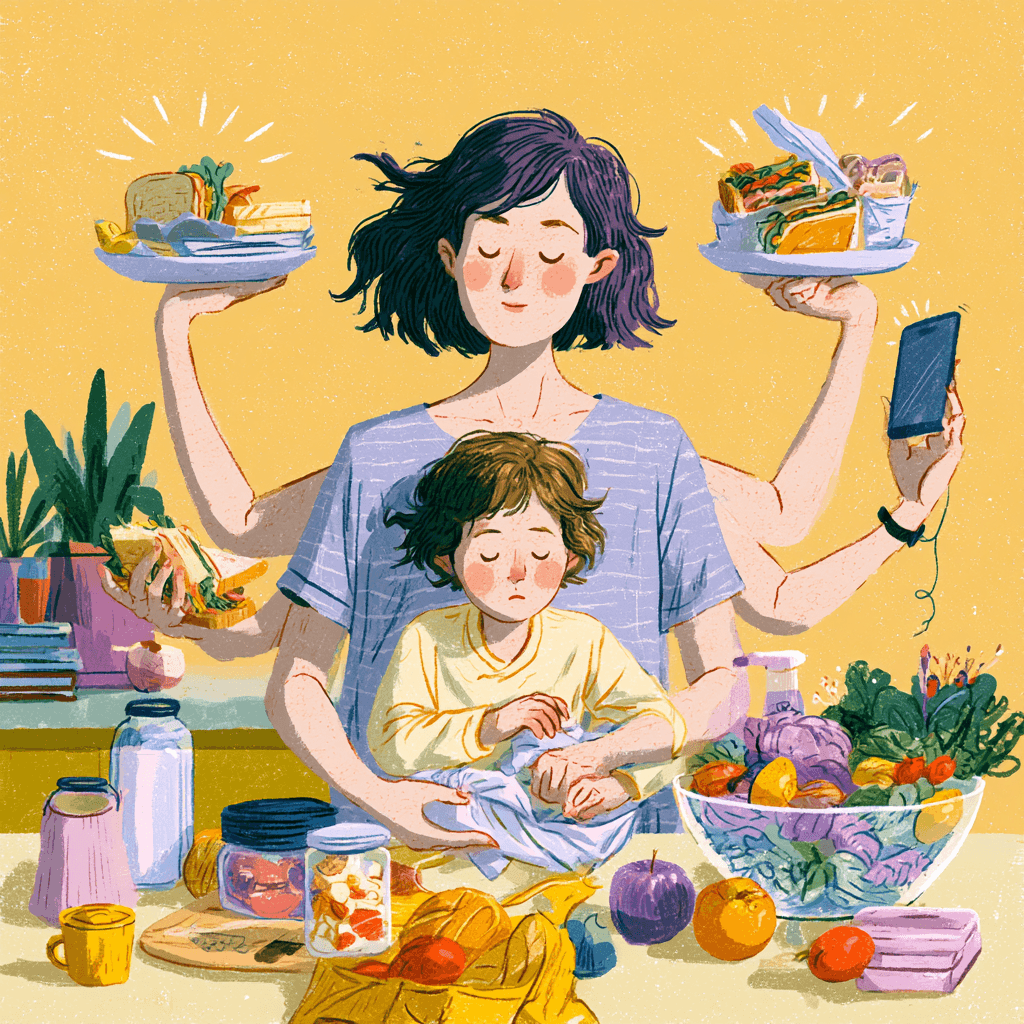
I am writing this with a kid asking for snacks, a load of laundry beeping, and the question already forming in my head — what am I making for dinner?
This is the rhythm of modern parenting. School drop-off. School pickup. After-school activities. The text from a teacher. The work Slack is still pinging at 5:47pm. Dinner at 6:30. The lunch that needs to be packed for tomorrow, before bed.
We live fast. That isn't a complaint. That's just the weather.
But somewhere along the way, the speed became the point. We started believing that more — more done, more checked off, more optimized — was the marker of a life well-lived.
It isn't. It never was.
The dinner question
The hardest part of my week, for years, was a single sentence.
What's for dinner?
I don't think anyone fully prepares you, when you become a parent, for the fact that you will be answering this question every single night for the next eighteen-plus years. There is no semester break. No syllabus. No menu fairy.
For a while, the question hung over me like a small storm cloud each afternoon. Around 4pm my shoulders would tighten. By 5pm I'd be scrolling recipe sites with two tabs of work still open. By 6pm I'd be cooking something I half-wanted to make, with a slight edge in my voice when someone asked when it would be ready.
The food was fine. But the bhava (the feeling, the energy I was cooking with) wasn't.
In Ayurveda, the cook's state of mind is considered an ingredient. Food prepared in frustration carries that frustration into the body. Food prepared with care, even simple food, even cold cereal, lands differently.
Eventually I figured something out. Not because I read it in a book. Because I lived it.
I built a small list of staples I rotate seasonally. Six or seven dishes I know by heart. Adjusted lightly for the season, for what's in the fridge, for who's home.
That's it. The whole system.
What that small list bought me was the dinner table. I stopped carrying the question: what should I make?, to the meal. I could just make it. And then I could sit down, and actually be there, and hear what my family did today.
The presence is the gift. The list is just what gets me to the gift.
The walking pace
There's a phrase I've been carrying lately.
Wisdom moves at a walking pace.
Not crawling. Not standing still. Walking. The pace evolution actually built for the human body, fast enough to get somewhere, slow enough to see where you are.
We've forgotten this pace. Cars, screens, fifteen-second videos, two-day shipping, breakfast eaten standing up, modern life has us moving at vehicle speed through what used to be human-speed moments.
The Ayurvedic word for the quality we're living in is rajas (the energy of activity, movement, agitation). Rajas isn't bad. You need it to get the kids out the door. You need it to ship the project. But when rajas becomes the only setting, the body burns out. The mind frays. Digestion suffers. Relationships get thinner.
The antidote isn't slowness for the sake of slowness. It's sattva (the quality of clarity, presence, balance). And sattva isn't something you schedule. It's something you practice, one small choice at a time.
One thing at a time
Here is the most modern thing I can tell you about Ayurveda, after years of studying it (and living it):
The whole practice can be condensed into five words.
One thing at a time.
That's it. That's the protocol.
When you're drinking your morning chai, drink it. Don't also scroll. Don't also draft the email in your head.
When you're brushing your daughter's hair before school, be there. Not in tomorrow's meeting. Not in the email you forgot to send.
When you're cooking dinner, cook. The chopping is a meditation if you let it be.
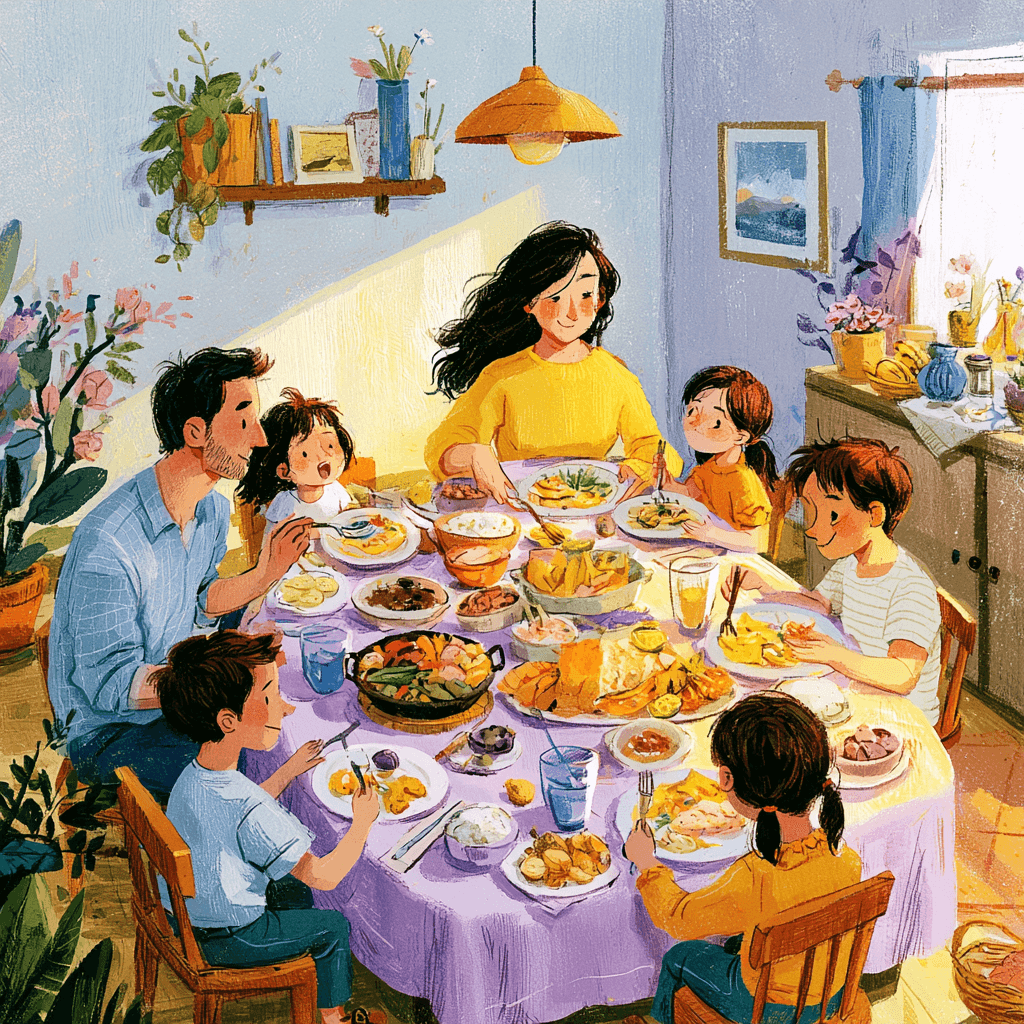
When you're eating dinner, eat. With the people you love, if you're lucky enough to have them at the table.
This isn't a productivity hack. This isn't "single-tasking" rebranded for a wellness audience. This is the actual root of the practice.
This is single-pointed awareness. The mind doing one thing fully, instead of seven things partially. The ancient texts considered it the foundation of every higher practice. You couldn't meditate, study, heal, or live well without it.
And the quiet miracle of single-pointed awareness is this: when you do one thing at a time, time itself slows down.
The dinner takes the same number of minutes. The drive to school takes the same number of minutes. The walk to the mailbox takes the same number of minutes.
But it feels like more. Because you were actually there for it.
Magic right?
What modern Ayurveda actually is
I will not pretend I always live this way. I have packed two lunches with one hand while pulling on a sock with the other and answered a work text in between. I am a modern mother. The speed is real.
But here is what I've learned: slowing down is not about removing the speed from your life. It's about finding the moments inside the speed where you can be fully there.
A single deep breath before you open the car door at pickup. A real look at your kid's face when they get in.
The thirty seconds it takes to pour the chai. Hot water. Spices. Steam.
The two minutes before bed when you finally put the phone in another room.
The simple meal on a Tuesday night that everyone eats together.
These are the moments where the walking pace lives. They are everywhere, if you start to look for them. They cost nothing. They take no extra time. They are the smallest possible interventions, and they completely change the texture of a life.
This is what I mean by modern Ayurveda. Not a protocol you graft onto a packed life. Not a list of supplements and rituals stacked on top of an already-overflowing day. A way of being inside the day you already have.
Ancient wisdom, modern life. Half-ancient, half-modern — the way a lot of us actually live.
Tonight
So tonight, when you sit down to dinner, whatever you made, however it came together — try this.
Put the phone away. Sit down. Take one breath before you eat.
Look at the people at the table.
Eat the food.
That's the walking pace. That's the whole practice.
And it was there waiting for you. It always was.
With love,
Lisa

By Lisa Mistry Ghatala
About the author
Lisa Mistry-Ghatala is an Ayurvedic Practitioner, Herbalist & Holistic Nutritionist, and the founder of SOMA Lifestyles. She works 1:1 with women who want to come back into rhythm — translating the wisdom of Ayurveda into the actual life you’re living.
Work with Lisa
Join the SOMA Circle