On the summer solstice, agni, and the timestamps the ancients kept.
On the summer solstice, agni, and the timestamps the ancients kept.
The word solstice comes from the Latin sol — sun — and sistere — to stand still.
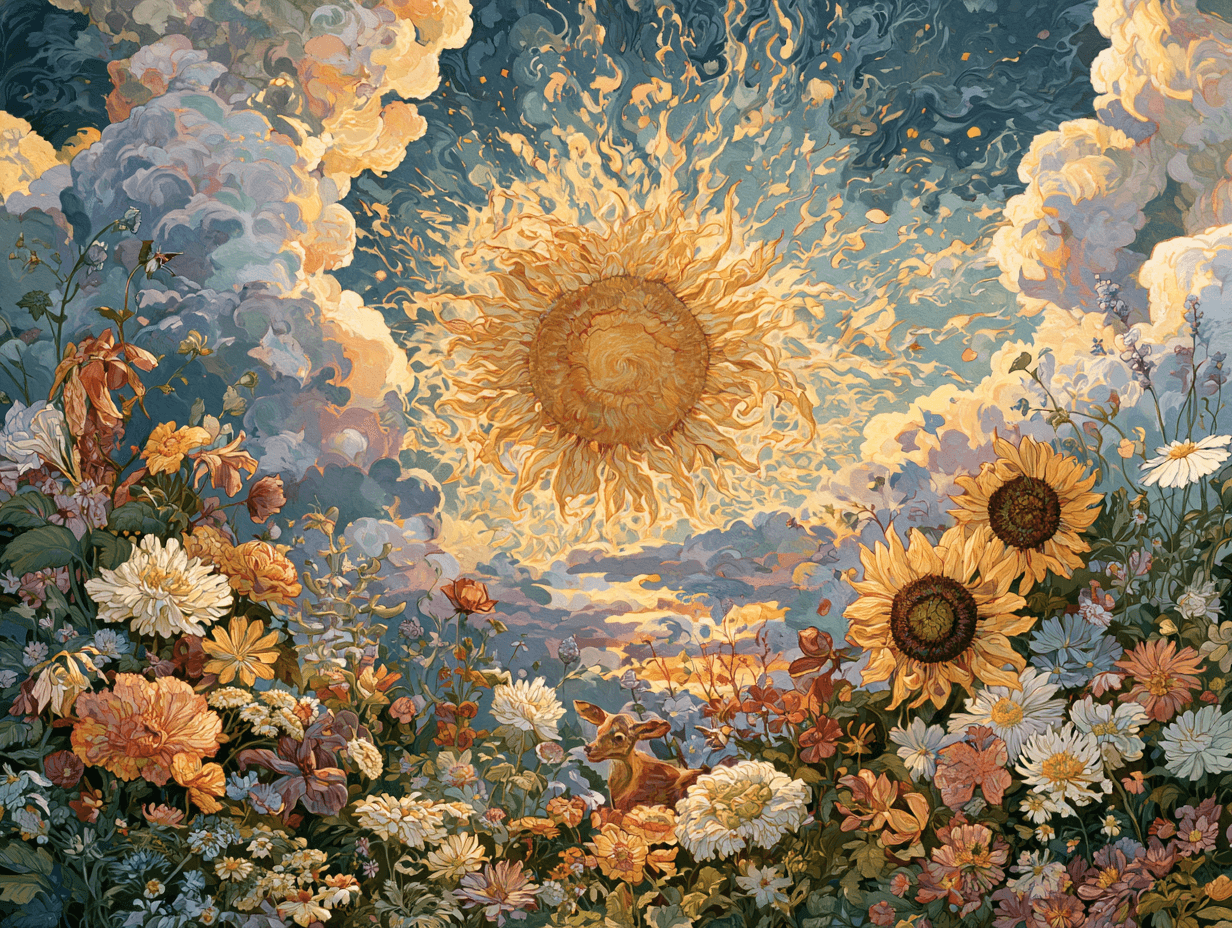
For three days each June, the sun pauses at its highest point in the sky. Its rising and setting points move so little that the ancients said the sun stood still. The longest days of the year. The shortest nights. The hinge of the wheel.
And then, slowly, the sun begins its long journey back toward the south. The days begin to shorten — one minute at a time, then one minute and twenty seconds, then more — until six months later, when we arrive at the longest night.
The summer solstice is a hinge moment. A timestamp. A natural calendar event that has nothing to do with school holidays or fiscal quarters or birthdays — and everything to do with the body that lives inside the rhythm of light.
We have forgotten how to keep these dates. Our calendars are full of notifications, deadlines, three-day weekends, content drops — but the natural timestamps, the ones the seasons and the body and the food and the sleep are all keyed to, we miss.
This year the solstice falls on Sunday, June 21 — Father's Day.
There is something to honor in that.
The Timestamps the Ancients Kept
The ancients did not have a Google calendar.
But they knew when summer began. They knew when winter began. They knew when the sun would reach its highest point and when it would reach its lowest — and they built whole monuments to the knowing.
Stonehenge in England, aligned to the sunrise of the summer solstice. The Egyptian pyramids, aligned to Sirius rising. The Inca built Inti Raymi, a festival to honor the Sun God. Native American Sun Dance ceremonies marked the longest day. Northern European villages lit Midsummer bonfires. The Vedic tradition called the same June moment Dakshinayana — the beginning of the sun's southward journey, the start of the night-half of the year.
These were their calendar notifications. The save-the-dates of an entire civilization, built in stone. Different tools. Same job.
We have lost the practice of marking these turns. The body has not. The body knows, even if we have forgotten how to listen. Sleep gets harder in late June. The appetite shifts. The skin runs hotter. The mind runs faster.
The ancients built monuments to remember. We can do something smaller. We can simply notice.
The Word Agni Lives in Ignite
There is a small etymological gift here.
The English word ignite comes from the Latin ignis — fire. And ignis comes, in the deep history of Indo-European languages, from the same root as the Sanskrit agni. The fire that transforms.
In Ayurveda, agni is the transformative principle — the digestive fire, yes, but also the metabolic fire in every cell, the perceptive fire in the eyes, the discerning fire in the mind. Agni is what takes what is outside us and makes it part of us. Food, light, experience, emotion. Agni digests all of it.
The summer solstice is peak external agni. The sun is at its highest point. The light is at its strongest.
Which means our internal agni must be tended carefully. When external fire is at its peak, internal fire is at its most vulnerable to imbalance — too much, too little, too erratic. The Ayurvedic teaching is gentle and counter-intuitive: cool the body where it is heating, but do not extinguish the fire. Cold-on-cold drowns agni. Steady, warm, balanced foods kindle it.
We are not putting out a fire. We are tending it.
This Year — Father's Day and the First Quarter Moon
This year the solstice falls on Sunday, June 21 — Father's Day in the United States.
There is a quiet alignment in that.
The sun has, in many traditions, been associated with the masculine principle — the divine father, the active and illuminating force, the energy that gives and gives without expecting return. In Vedic astrology, Surya — the Sun — is the father of the chart, the source of vitality, the cosmic pita. (The Sanskrit word pitr, meaning father, shares its root with pitta itself.)
On Father's Day, the cosmic father is at the peak of his year. The earthly father — the one who taught us, the one who showed up, the one whose hands held ours — is honored on the same day.
There is something to that. Something worth pausing for.
The moon, on the same day, is at its first quarter — half-light, half-shadow, building. The first quarter moon is the moment of decisive action in the lunar cycle, the moment of choice. The waxing moon meets the peak sun. Internal light meets external light. The cup of the sky is full.
You do not have to do anything with this information. It will land or it will not.
How to Honor It
You do not need to build a monument.
You can light a candle at sunrise. You can sit outside as the sun reaches its highest point and acknowledge that the light is at peak. You can eat a meal that is cooling — cucumber, mint, coconut, sweet fruits, dairy if your body tolerates it — and let the meal itself be the marking. You can call your father, if your father is still here. You can call to the memory of him, if he is not. You can take a long evening walk after the light has softened. You can journal one sentence about what is being asked of you in this turning of the wheel.
Or — the smallest, most modern version — add today's date to your calendar so you remember next year. Subscribe to one that tracks the solstices and the moon phases for you. The body has been keeping this calendar all along. Let your phone catch up.
You can do nothing more than notice that the sun pauses today. That it has paused on this same date for as long as the earth has been the earth. That the ancients knew. That the body knows.
That is enough.
A Final Thought
We were not meant to keep our calendars by notifications.
We were meant to keep them by light. By the sun rising and setting and standing still. By the moon waxing and waning. By the slow turning of the seasons and the bodies that live inside them.
We can have both. We can keep the calendars that work. And we can also remember the older calendar — the one our ancestors kept by looking up.

By Lisa Mistry Ghatala
About the author
Lisa Mistry-Ghatala is an Ayurvedic Practitioner, Herbalist & Holistic Nutritionist, and the founder of SOMA Lifestyles. She works 1:1 with women who want to come back into rhythm — translating the wisdom of Ayurveda into the actual life you’re living.
Work with Lisa
Join the SOMA Circle